How do we build a Hunter Region that is more resilient, connected and prepared for change?
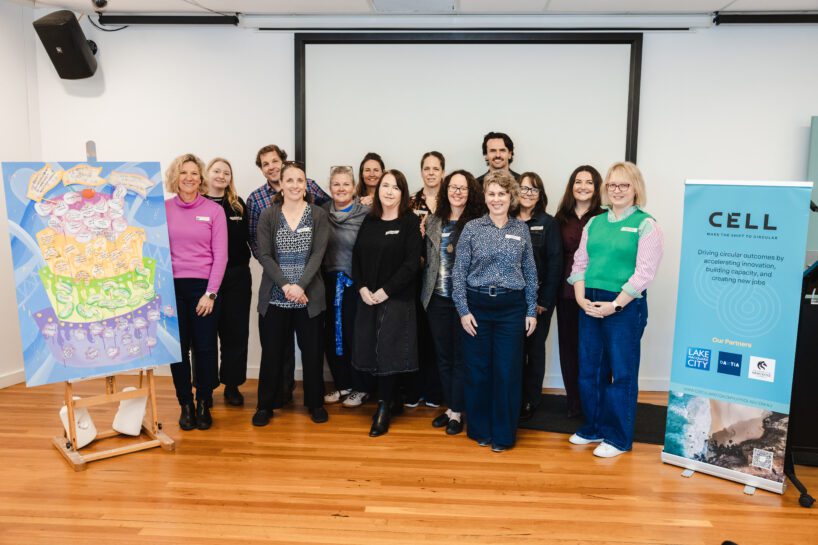
CELL partnered with AdaptNSW and Regen Labs to deliver the Recipe for Resilience workshop, bringing together people from local government, business, industry, research, consulting and the community to explore what a resilient Hunter could look like over the next 10 years.
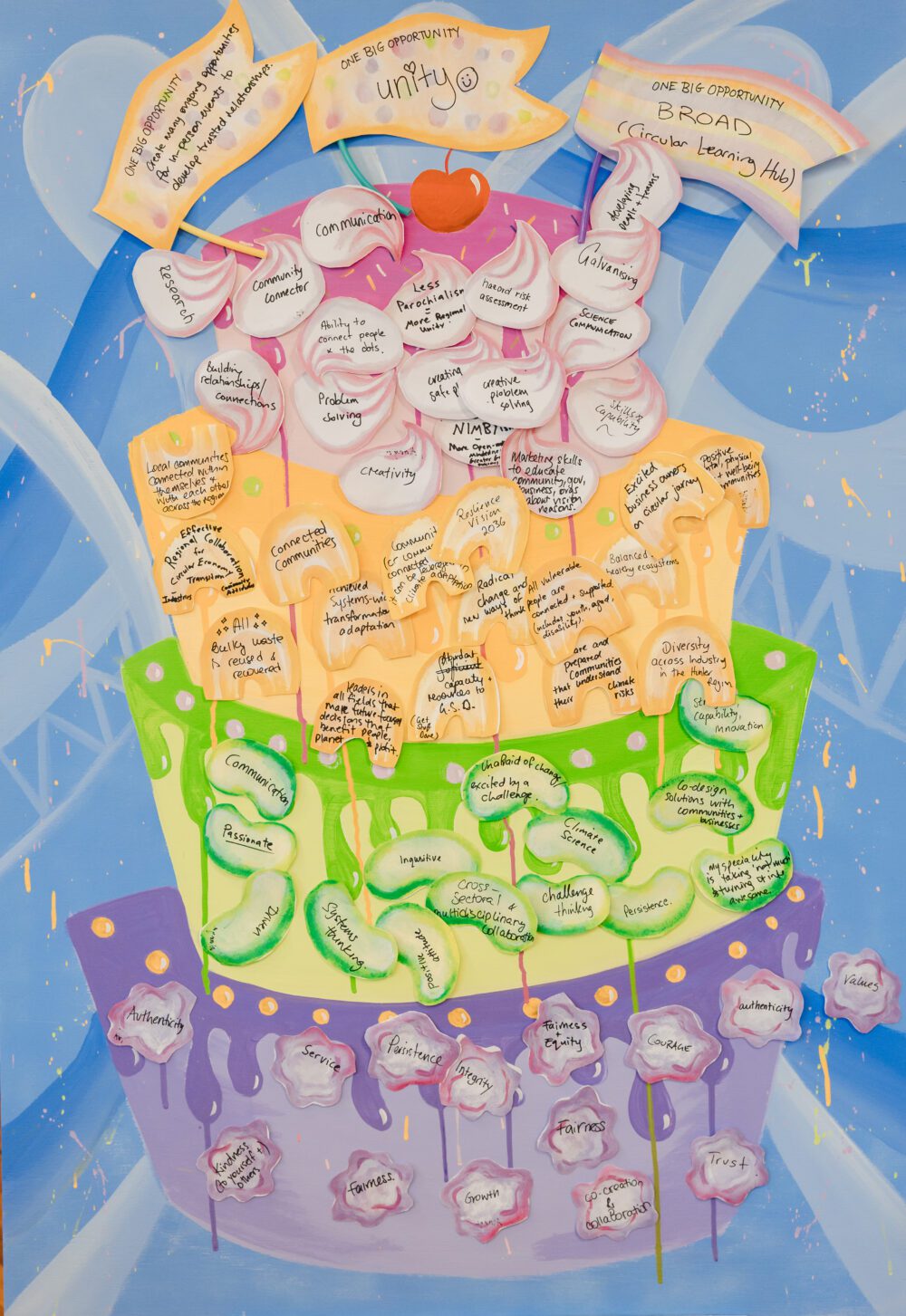
Rather than beginning with a predetermined solution, participants were asked to identify the values, skills and capabilities they could bring to the region, the gaps that still need to be addressed, and their vision for the Hunter’s future. Participants developed three possible visions before rapidly prioritising the one that mattered most to them.
What emerged?
One of the strongest findings was how closely people’s priorities aligned with the sectors they represented.
The workshop resulted in 3 emerging micro-communities, each centred around a distinct regional need:
- Government participants consistently identified greater coordination and alignment between local and state government as a priority.
- Community and research participants focused strongly on trust, meaningful engagement and more opportunities for face-to-face connection.
- Industry participants identified the need for greater circular economy education, collaboration and shared infrastructure or hub-based approaches.
This level of alignment was unexpected. Despite participants developing their visions independently, similar priorities repeatedly emerged within each sector. It provided a useful insight into where different parts of the regional system currently see barriers—and where targeted collaboration could have the greatest impact.
From a workshop to action
A key principle behind Recipe for Resilience was that regions do not always need another strategy or study before taking action.
Sometimes the missing ingredient is connection: finding other people who are trying to achieve the same outcome and creating a trusted environment where they can work together.
The 3 micro-communities created through the workshop are intended to provide that foundation. CELL’s role is to continue connecting these change-makers, helping ideas progress from discussion and concept development towards partnerships, potential funding opportunities and practical projects.
The bigger finding: resilience is a systems challenge
The workshop reinforced that regional resilience is not owned by any single organisation or level of government.
A resilient Hunter requires:
- diverse industries and skills;
- stronger regional coordination;
- trusted relationships between sectors;
- early and meaningful community participation;
- local supply-chain and economic capability; and
- people who are empowered to move ideas into action.
Circular economy thinking supports this by strengthening local resource security, retaining value within the region and creating more regenerative and adaptable systems. For CELL, resilience is therefore not simply about “bouncing back” after disruption, it is about building the connections and capabilities that allow the Hunter to work together to stabilise and move forward.
Recipe for Resilience at a glance
10-year future vision explored
3 micro-communities formed
6+ perspectives represented across government, business, industry, research, consulting and community
3 visions developed by participants before selecting their highest priority
1 common finding: stronger connection and coordination are critical to regional resilience
The workshop also highlighted an important shift for future regional engagement: moving from communities being consulted after solutions are developed towards involving people earlier, when ideas, priorities and projects are still being shaped.
For CELL, Recipe for Resilience is about turning that insight into practice, connecting the Hunter’s change-makers and creating the conditions for collective action.
To find similar case studies for place based workshops, take a look here: https://www.climatechange.environment.nsw.gov.au/stories-and-case-studies and for useful online tools, head over to https://www.climatechange.environment.nsw.gov.au/resources-and-research to find what could work for your group.